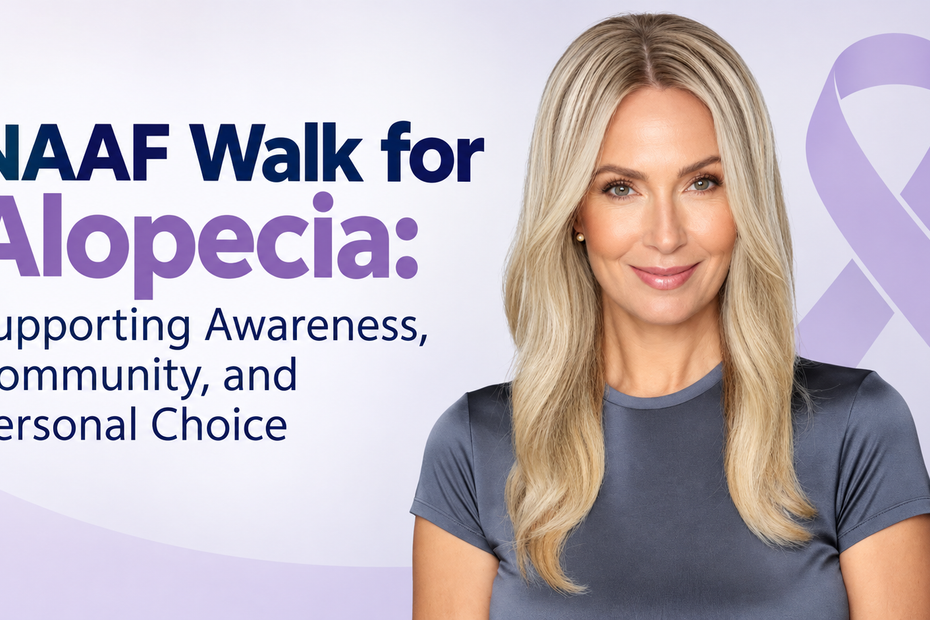
Living with alopecia is about much more than losing hair. For many people, changes in hair can affect confidence, daily routines, social experiences, and the way they see themselves. That is why awareness and community can be just as important as learning about hair-loss solutions.
The NAAF Walk for Alopecia brings people together around that idea. Organized by the National Alopecia Areata Foundation, the annual event creates an opportunity for people with alopecia, families, friends, caregivers, healthcare professionals, and supporters to connect while raising awareness and supporting the alopecia community.
What Is the NAAF Walk for Alopecia?
The Walk for Alopecia is a community-focused event designed to increase awareness of alopecia areata, support research, and bring people together.
The 2026 national Walk is scheduled for September 26, with major events in Boston, Philadelphia, and San Francisco, along with community walks and the “Walk Where You Are” option. Local events may take place on different dates.
The format is simple, but the purpose goes beyond walking. For someone who has recently been diagnosed with alopecia, seeing other people openly sharing their experiences can make the condition feel less isolating.
Why Does Alopecia Awareness Matter?
Alopecia does not look the same for everyone. One person may experience a small patch of hair loss, while another may lose hair across much of the scalp. Some people experience changes around the hairline or crown, while others may have more extensive loss.
Because experiences vary, there is no single way that someone “should” deal with alopecia.
Some people choose to embrace their natural appearance. Others use hair toppers or wigs as part of their everyday style. Both choices are personal.
Awareness helps create an environment where people do not have to explain or defend the way they choose to manage their hair loss.
How Can Hair Toppers and Wigs Fit Into an Alopecia Journey?
Alternative hair can be one option for people who want additional coverage. A topper can be useful when hair loss is concentrated around the crown, part, or hairline and enough natural hair remains to blend with the piece.
For more extensive hair loss, a full wig may provide broader coverage.
Women who prefer natural texture and styling flexibility may also explore human hair toppers. These can be blended with existing hair and styled to create a cohesive look.
For people with more extensive loss, human hair wigs can offer another option with natural movement and styling versatility.
The important point is that a hair solution does not treat alopecia. It is simply a cosmetic option for people who choose to use one.
What Should You Consider When Choosing a Hair Solution?
Hair loss can change, so it is useful to reassess your needs from time to time.
Consider:
- Where is the hair loss occurring?
- How much coverage do you need?
- Do you still have enough natural hair for a topper?
- Is scalp comfort a priority?
- Do you want to keep your existing hairstyle?
- Would you prefer the broader coverage of a wig?
For someone with partial thinning, hair toppers for women can provide targeted coverage while leaving the surrounding natural hair visible. A full wig may make more sense when hair loss becomes more widespread.
Looking for Hair Toppers Near You?
If you are searching for hair toppers near me, visiting a showroom, salon, or alternative-hair specialist can be useful. Seeing different base sizes, colors, densities, and attachment methods in person can make it easier to understand what may work with your current hair.
But there is no universal answer. The right choice depends on the person wearing it.
Beyond the Walk
The NAAF Walk for Alopecia is a reminder that awareness should continue beyond a single event. Learning about alopecia, listening to people living with hair loss, and respecting individual choices can all contribute to a more understanding community.
For some people, that may mean participating in a walk. For others, it may mean sharing their story, supporting research, or simply learning more about the condition.
Alopecia is part of someone’s story, but it does not define the whole person. Whether someone chooses a hair topper, a wig, or no hair covering at all, that choice deserves to be respected.