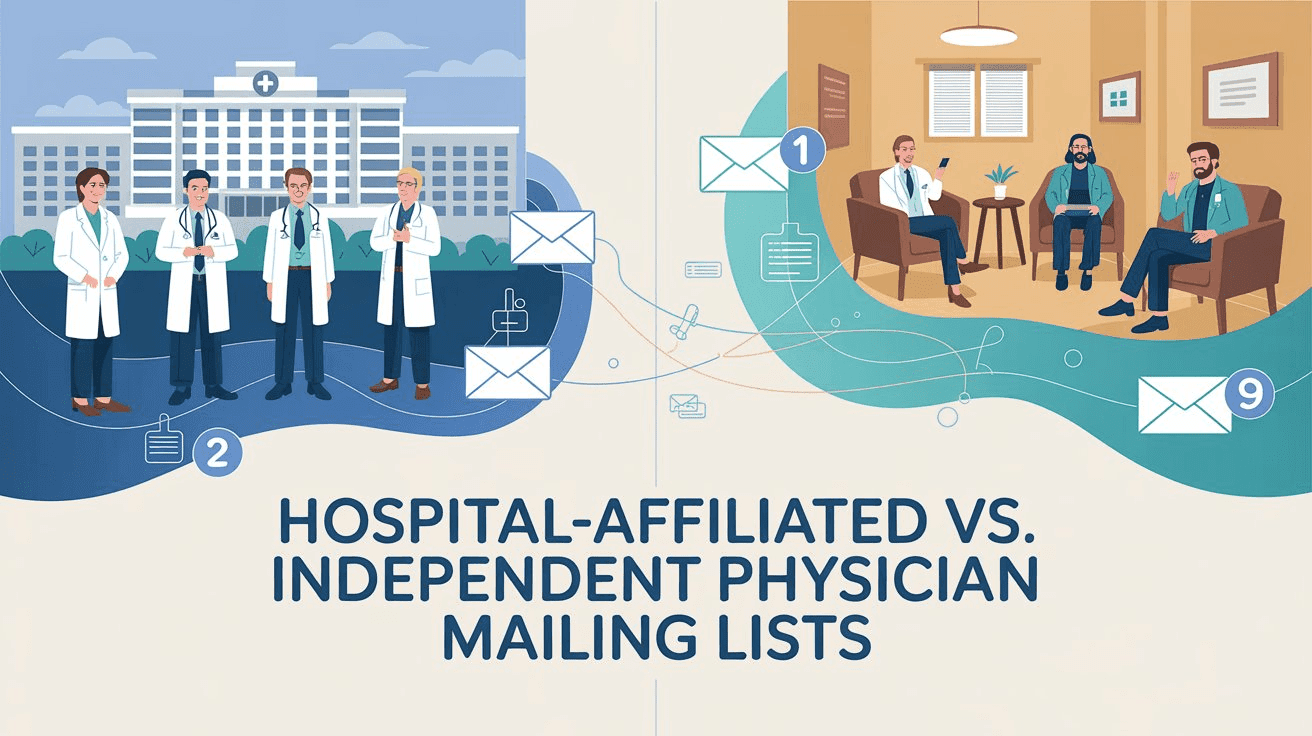
Reaching healthcare professionals requires precision, reliable data, and strategic targeting. A well-segmented Physician Email List helps healthcare marketers, pharmaceutical companies, and medical device suppliers connect with the right professionals effectively. However, marketers often face a critical decision when selecting their data source—whether to use hospital-affiliated physician lists or independent physician mailing lists. Understanding the differences between these two options can significantly impact campaign success and return on investment.
In this blog, we’ll explore the characteristics, benefits, and best use cases for both types of mailing lists to help businesses make informed marketing decisions.
What Are Hospital-Affiliated Physician Mailing Lists?
Hospital-affiliated physician mailing lists contain contact details of doctors who are associated with hospitals, healthcare systems, or medical institutions. These physicians often work within structured healthcare environments and collaborate with other healthcare professionals.
Key Characteristics
- Physicians are connected to specific hospitals or healthcare networks
- Typically include specialists, surgeons, and department heads
- Often participate in institutional purchasing and clinical decision-making
- Data may include hospital name, department, and professional role
Advantages of Hospital-Affiliated Physician Lists
1. Access to Institutional Decision Makers
Hospital-affiliated physicians frequently influence or participate in group purchasing decisions. Marketers promoting medical equipment, hospital software, or large-scale healthcare solutions often benefit from targeting this audience.
2. Greater Credibility and Professional Influence
Physicians working in hospitals usually maintain strong reputations within the healthcare industry. Marketing campaigns targeting these professionals can enhance brand credibility and trust.
3. Higher Adoption of Advanced Medical Technologies
Hospitals often adopt innovative medical technologies faster than smaller practices. This makes hospital-based physicians valuable prospects for advanced healthcare products.
Potential Limitations
- Institutional policies may restrict direct marketing communication
- Longer decision-making cycles due to administrative approval
- Less flexibility in product adoption compared to independent practices
What Are Independent Physician Mailing Lists?
Independent physician mailing lists focus on healthcare professionals who operate private clinics, specialty practices, or group medical offices outside large hospital systems. These physicians often have greater autonomy in decision-making.
Key Characteristics
- Physicians manage or co-manage their own medical practices
- Greater control over purchasing and service adoption
- Often serve niche or local patient communities
- Includes primary care physicians and specialized practitioners
Advantages of Independent Physician Lists
1. Faster Decision-Making Process
Independent physicians can make purchasing decisions without hospital administrative barriers. This allows marketers to experience shorter sales cycles and quicker conversions.
2. Direct Marketing Opportunities
Independent practices are generally more open to personalized marketing campaigns, product demonstrations, and service-based promotions.
3. Ideal for Small to Mid-Sized Healthcare Solutions
Products such as clinic management software, diagnostic tools, and telemedicine platforms often gain better traction among independent physicians.
Potential Limitations
- Smaller purchasing budgets compared to hospitals
- Limited influence over large institutional contracts
- Variability in technology adoption across practices
Comparing Hospital-Affiliated and Independent Physician Mailing Lists
Below is a detailed comparison highlighting the major differences between both mailing list types:
| Criteria | Hospital-Affiliated Physician Lists | Independent Physician Lists |
| Decision Authority | Shared with hospital administration | Individual or small group decisions |
| Budget Size | Typically larger institutional budgets | Smaller but flexible budgets |
| Sales Cycle | Longer approval processes | Faster purchase decisions |
| Marketing Approach | Requires professional and compliance-focused messaging | Allows personalized and direct marketing |
| Product Suitability | Medical equipment, enterprise software, clinical technologies | Practice management tools, telehealth, diagnostics |
| Targeting Precision | Department and institutional role-based segmentation | Specialty and location-based segmentation |
When Should You Choose Hospital-Affiliated Physician Mailing Lists?
Hospital-affiliated physician lists are ideal when your marketing goals involve:
- Promoting advanced medical equipment or hospital infrastructure solutions
- Launching pharmaceutical products requiring clinical trials or institutional approval
- Building partnerships with healthcare systems or hospital networks
- Targeting physicians involved in research and medical innovation
These mailing lists work best for organizations that focus on enterprise-level healthcare solutions and long-term relationship building.
When Should You Choose Independent Physician Mailing Lists?
Independent physician mailing lists are most effective for campaigns that aim to:
- Promote clinic-focused healthcare technologies
- Introduce new patient engagement or telemedicine solutions
- Market practice management and workflow optimization tools
- Reach local healthcare providers for service-based offerings
These lists allow marketers to target physicians who can independently adopt new services or products.
How Data Accuracy Impacts Campaign Success
Regardless of the type of mailing list selected, data quality remains crucial. Verified and updated physician databases help reduce bounce rates, improve email engagement, and increase campaign ROI. Reliable contact information ensures marketing messages reach the intended audience and supports better lead nurturing.
Businesses should prioritize providers that maintain regularly updated physician databases, verify professional credentials, and comply with healthcare marketing regulations.
Best Practices for Using Physician Mailing Lists
To maximize the effectiveness of physician mailing lists, marketers should follow several best practices:
Segment Your Audience Carefully
Segment mailing lists based on specialty, location, professional role, and healthcare setting to improve message relevance.
Personalize Communication
Customized email campaigns that address physician needs and challenges typically generate higher engagement rates.
Focus on Value-Based Messaging
Healthcare professionals prefer marketing content that provides clinical insights, patient care improvements, or operational benefits.
Ensure Compliance with Regulations
Following regulations such as CAN-SPAM and healthcare data guidelines protects brand reputation and avoids legal complications.
Choosing the Right Mailing List for Your Marketing Goals
The decision between hospital-affiliated and independent physician lists depends largely on campaign objectives, product type, and target audience behavior. Organizations promoting enterprise healthcare solutions may benefit more from hospital-based physician targeting. Meanwhile, companies offering flexible or clinic-level services often find greater success with independent physician outreach.
Understanding the professional environment and purchasing authority of your target physicians helps create more strategic and successful marketing campaigns.
Conclusion
Both hospital-affiliated and independent physician mailing lists play an important role in modern healthcare marketing strategies. Hospital-based physicians often influence large-scale purchasing decisions and are more exposed to advanced medical technologies, making them ideal targets for enterprise-level solutions. Independent physicians, on the other hand, bring agility, quicker decision-making, and openness to personalized outreach, which can accelerate campaign results. Choosing between these segments should be driven by clear marketing goals, product scope, budget size, and the level of authority required to close deals successfully.
A well-maintained physician mailing list helps marketers reach the right audience with accurate, compliant, and relevant messaging. When data is verified, segmented, and aligned with campaign objectives, it improves engagement rates, boosts lead quality, and supports long-term healthcare marketing success.